Ever wondered how a company sells to another business, which then sells to the end customer? That’s the magic of b2b2c. It’s not just a buzzword—it’s a game-changing model reshaping industries from tech to retail.





What Is B2B2C and Why It Matters

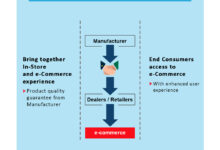
The term b2b2c, or Business-to-Business-to-Consumer, refers to a hybrid business model where a company (the first ‘B’) provides products or services to another business (the second ‘B’), which then delivers value directly to the end consumer (the ‘C’). This model blends the strengths of both B2B and B2C strategies, creating a seamless value chain that benefits all parties involved.
Unlike traditional B2B models, where the end user is often invisible, b2b2c brings the consumer into focus. The first business doesn’t just sell to a corporate client—it indirectly influences the final customer experience. This shift has profound implications for branding, customer data, and long-term loyalty.
The Evolution of B2B2C
The b2b2c model didn’t emerge overnight. It evolved from the limitations of traditional B2B and B2C structures. In the past, manufacturers sold to retailers (B2B), and retailers sold to consumers (B2C), with little collaboration between the two. The brand behind the product often had no direct relationship with the buyer.
With the rise of digital platforms, e-commerce, and data analytics, companies began seeking closer ties to end users. This led to the development of b2b2c as a strategic framework. For example, a software provider might partner with a bank (B2B), allowing the bank to offer personalized financial tools to its customers (B2C), while the software company gains insights into user behavior.
According to McKinsey & Company, b2b2c models are increasingly vital in industries where customer experience and data integration are key differentiators.
Key Characteristics of B2B2C
Several defining traits set b2b2c apart from other business models:
- Shared customer ownership: Both businesses share responsibility for the customer journey.
- Data collaboration: Partners exchange consumer insights to improve service and personalization.
- Co-branded experiences: The end product often reflects both brands, enhancing trust and recognition.
- Value chain integration: Seamless coordination between supplier, intermediary, and consumer.
“The future of commerce isn’t just B2B or B2C—it’s b2b2c, where collaboration drives innovation.” — Harvard Business Review
How B2B2C Differs from B2B and B2C
Understanding the distinctions between b2b2c, B2B, and B2C is crucial for businesses evaluating their go-to-market strategies. While they may seem similar on the surface, the dynamics, goals, and execution differ significantly.
B2B vs. B2B2C: A Closer Look
Traditional B2B relationships are transactional and often siloed. A manufacturer sells raw materials to a factory, with no interest in who ultimately buys the finished product. The focus is on volume, contracts, and supply chain efficiency.
In contrast, b2b2c introduces a layer of consumer-centricity. The original supplier cares about how the end user perceives the product. For instance, a cloud software provider working with an e-commerce platform doesn’t just want uptime guarantees—it wants its tools to enhance the shopper’s experience, leading to better retention and brand equity.
This shift requires new KPIs: customer satisfaction scores, Net Promoter Score (NPS), and user engagement metrics become as important as sales volume.
B2C vs. B2B2C: The Hidden Partnership
Traditional B2C companies interact directly with consumers. Think of Amazon or Nike—they control the entire customer journey, from marketing to delivery.
In a b2b2c setup, the first business (e.g., a fintech startup) relies on a partner (e.g., a telecom company) to reach customers. The telecom handles billing and support, while the fintech provides the core service. The consumer may not even realize two companies are involved.
This model allows smaller innovators to scale rapidly without building massive distribution networks. However, it also means relinquishing some control over branding and customer service.
Real-World Examples of B2B2C Success
The true power of b2b2c becomes evident when examining real-world implementations. Across industries, companies are leveraging this model to drive growth, enhance customer experience, and unlock new revenue streams.
Tech Platforms and E-Commerce
One of the most prominent examples of b2b2c is Amazon Web Services (AWS). AWS sells cloud infrastructure to businesses (B2B), which then use it to power their own consumer-facing apps (B2C). For instance, Netflix relies on AWS to stream content to millions of users. While consumers interact with Netflix, AWS plays a critical behind-the-scenes role.
This partnership allows AWS to scale globally while Netflix focuses on content and UX. Both benefit: AWS gains recurring revenue, and Netflix enjoys reliable, scalable infrastructure.
Another example is Shopify. It provides e-commerce tools to merchants (B2B), who then sell directly to consumers (B2C). Shopify doesn’t handle customer service for end buyers, but it influences the shopping experience through its platform design, app ecosystem, and performance metrics.
Financial Services and Fintech
The financial sector has embraced b2b2c to bridge the gap between innovation and trust. Traditional banks are often slow to adopt new technologies, while fintech startups lack regulatory licenses and customer bases.
Enter b2b2c: a fintech company develops a mobile payment solution and partners with an established bank. The bank integrates the tech into its app, offering it to its millions of customers. The end user sees the bank’s brand, but the functionality comes from the fintech.
Revolut and Starling Bank have used this model to expand into new markets. Similarly, Mastercard’s Priceless program partners with retailers to offer exclusive experiences to cardholders—blending B2B partnerships with B2C rewards.
Healthcare and Telemedicine
In healthcare, b2b2c is transforming patient access to services. Teladoc Health, for example, partners with employers and insurance companies (B2B) to provide telehealth services to employees and policyholders (B2C).
The employer pays for the service, but the employee uses it directly. Teladoc benefits from scale, the employer improves employee wellness, and the patient gets convenient care. Data flows between all parties (with consent), enabling personalized health recommendations.
This model reduces costs, improves outcomes, and increases satisfaction—proving that b2b2c can deliver both economic and social value.
The Strategic Advantages of B2B2C
Why are so many companies shifting toward b2b2c? The answer lies in its unique strategic advantages. When executed well, this model creates win-win-win scenarios for suppliers, intermediaries, and consumers.
Access to Larger Customer Bases
For startups and niche providers, reaching consumers at scale is expensive and time-consuming. B2B2C offers a shortcut. By partnering with established businesses that already have large customer bases, smaller players can achieve rapid market penetration.
Consider a new AI-powered language learning app. Instead of spending millions on ads, it partners with a global airline. The airline offers the app as a premium feature to frequent flyers. Instantly, the app gains access to a loyal, high-value audience.
This kind of partnership is especially powerful in saturated markets where customer acquisition costs are high.
Enhanced Data and Customer Insights
In traditional B2B, the supplier has little visibility into end-user behavior. In b2b2c, data-sharing agreements can unlock rich insights. A SaaS provider, for instance, might learn how customers use its software through the partner’s analytics dashboard.
These insights enable product improvements, targeted marketing, and predictive support. Over time, this leads to higher customer lifetime value (CLV) and reduced churn.
However, data privacy is a critical concern. Companies must comply with regulations like GDPR and CCPA, ensuring transparency and consent in data usage.
Shared Risk and Investment
Launching a new product or entering a new market is risky. B2B2C allows partners to share both the financial burden and operational risks.
For example, a smart home device manufacturer might collaborate with a utility company to offer energy-saving gadgets to homeowners. The utility funds part of the rollout in exchange for reduced grid load. The manufacturer gets a guaranteed buyer, and customers receive discounts.
This co-investment model makes innovation more sustainable and scalable.
Challenges and Risks in B2B2C Models
Despite its many benefits, b2b2c is not without challenges. Companies must navigate complex relationships, alignment issues, and potential conflicts of interest.
Brand Control and Identity
One of the biggest risks in b2b2c is losing control over brand perception. Since the end customer interacts primarily with the intermediary, the original supplier’s brand may be invisible or diluted.
For example, a premium skincare brand supplying products to a pharmacy chain might find its items displayed alongside generic brands. Without proper positioning, its premium image could suffer.
To mitigate this, clear branding guidelines, co-marketing campaigns, and exclusive packaging can help maintain identity.
Data Privacy and Security Concerns
Sharing customer data is a cornerstone of b2b2c, but it also introduces significant risks. A data breach at the partner level can damage both brands. Moreover, consumers may not be aware that multiple companies have access to their information.
Transparency is key. Companies should disclose data practices clearly and obtain explicit consent. Implementing robust cybersecurity protocols and conducting regular audits can minimize exposure.
The UK Information Commissioner’s Office (ICO) emphasizes that joint controllership in data processing requires clear accountability and compliance frameworks.
Alignment of Goals and Incentives
Partners in a b2b2c relationship may have different priorities. The supplier might focus on product innovation, while the intermediary prioritizes cost efficiency and customer retention.
Without alignment, this can lead to friction. For instance, a software company may want to push frequent updates, but the partner prefers stability to avoid customer complaints.
Solving this requires strong governance, shared KPIs, and regular communication. Contracts should include performance benchmarks and dispute resolution mechanisms.
How to Build a Successful B2B2C Strategy
Transitioning to a b2b2c model isn’t just about finding a partner—it requires a strategic overhaul. Companies must rethink their value proposition, technology stack, and customer engagement approach.
Identify the Right Partners
Not all businesses make good b2b2c partners. The ideal partner should:
- Have a complementary customer base
- Share similar brand values
- Possess strong distribution or service capabilities
- Be open to collaboration and data sharing
Due diligence is essential. Evaluate potential partners’ financial health, reputation, and technological readiness. Pilot programs can test compatibility before full-scale rollout.
Design a Seamless Customer Experience
The end user should not feel like they’re caught in a corporate handshake. The experience must feel unified, even if multiple brands are involved.
This requires:
- Integrated user interfaces (e.g., single sign-on)
- Consistent messaging and tone
- Unified customer support channels
- Smooth onboarding and checkout processes
Apple’s partnership with Goldman Sachs on the Apple Card is a prime example. The card is issued by Goldman, but the experience—from application to spending insights—is fully embedded in the Apple Wallet, creating a frictionless journey.
Leverage Technology and APIs
Modern b2b2c models rely heavily on Application Programming Interfaces (APIs) to connect systems. APIs enable real-time data exchange, service integration, and automated workflows.
For example, a travel booking platform might use airline APIs to display flights, hotel APIs for accommodations, and payment gateway APIs for transactions—all within a single interface.
Investing in a robust API strategy ensures scalability, reliability, and security. Platforms like MuleSoft specialize in API-led connectivity for b2b2c ecosystems.
The Future of B2B2C: Trends and Predictions
As digital transformation accelerates, b2b2c is poised to become the dominant business model in many sectors. Emerging technologies and shifting consumer expectations are driving this evolution.
Rise of Ecosystems and Platform Thinking
Companies are moving from linear supply chains to interconnected ecosystems. In these networks, multiple b2b2c relationships coexist, creating value through synergy.
For example, a smart city initiative might involve:
- A sensor manufacturer (B) selling to a municipal agency (B)
- The agency using data to improve traffic flow for citizens (C)
- A navigation app integrating that data to guide drivers (C)
Each player adds value, and the consumer benefits from a smarter urban experience.
According to Gartner, by 2025, 80% of B2B companies will participate in at least one ecosystem, up from 30% in 2020.
AI and Personalization at Scale
Artificial Intelligence (AI) is enabling hyper-personalization in b2b2c models. By analyzing shared data, AI can predict customer needs, recommend products, and automate support.
For instance, an insurance provider partnering with a fitness tracker company can offer dynamic premiums based on user activity. The fitness brand gains engagement, the insurer reduces risk, and the customer gets lower rates for healthy behavior.
AI also enhances operational efficiency—automating partner onboarding, monitoring performance, and detecting fraud.
Sustainability and Ethical B2B2C
Consumers are increasingly demanding ethical and sustainable practices. B2B2C models can amplify these efforts by aligning partners around shared ESG (Environmental, Social, and Governance) goals.
A clothing brand might partner with a logistics company that uses electric vehicles. The end customer sees a “carbon-neutral delivery” badge at checkout, enhancing brand loyalty.
Transparency in sourcing, labor practices, and carbon footprint will become key differentiators in b2b2c partnerships.
What is the main difference between B2B and B2B2C?
The main difference is customer visibility. In B2B, the end consumer is typically invisible to the supplier. In b2b2c, the supplier actively influences the end customer experience through a partner, often sharing data and branding to enhance value.
Can small businesses use the B2B2C model?
Absolutely. Small businesses can leverage b2b2c to access larger markets through partnerships with established companies. For example, a niche software developer can integrate its tool into a popular CRM platform, reaching thousands of potential customers without direct sales efforts.
How does data sharing work in B2B2C?
Data sharing in b2b2c is governed by agreements that define what data is exchanged, how it’s used, and who owns it. It often involves APIs for real-time integration, with strict compliance to privacy laws like GDPR. Transparency with end users is critical to maintain trust.
What industries benefit most from B2B2C?
Industries with high customer interaction and digital infrastructure benefit most—technology, financial services, healthcare, retail, and telecommunications. Any sector where innovation meets distribution can leverage b2b2c for growth.
Is B2B2C the future of commerce?
While not replacing B2B or B2C entirely, b2b2c is becoming a dominant hybrid model. Its ability to combine scale, innovation, and customer focus makes it ideal for the digital age. Companies that master b2b2c will have a significant competitive advantage.
In conclusion, the b2b2c model is more than a trend—it’s a strategic imperative for businesses aiming to thrive in a connected world. By bridging the gap between enterprise and end-user, it unlocks unprecedented opportunities for growth, innovation, and customer loyalty. Whether you’re a startup or a multinational, understanding and leveraging b2b2c can be the key to your next breakthrough.
Further Reading: