Ever wondered what exactly ‘b2b meaning’ stands for and why it’s reshaping industries worldwide? It’s not just jargon—it’s the backbone of modern commerce. Let’s break it down in simple, powerful terms.




Understanding the Core B2B Meaning

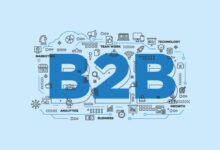
At its heart, the b2b meaning refers to ‘business-to-business’ transactions—where one business sells products or services to another. Unlike B2C (business-to-consumer), B2B focuses on solving business problems, streamlining operations, and driving long-term value. It’s less about emotional appeal and more about logic, ROI, and efficiency.
Defining B2B in Modern Commerce
The b2b meaning has evolved beyond simple supplier relationships. Today, it encompasses complex ecosystems involving software providers, logistics firms, consulting agencies, and manufacturers. According to Investopedia, B2B accounts for over $12 trillion in global sales annually—making it a dominant economic force.
- B2B involves transactions between legal entities, not individuals.
- Decisions are often made by committees, not single buyers.
- Sales cycles are longer but yield higher lifetime value.
How B2B Differs from B2C
While both models aim to generate revenue, the b2b meaning diverges sharply from B2C in several key areas. B2C targets emotions and impulse; B2B targets logic and strategy. A B2C ad might say, “Buy now and feel amazing!” A B2B ad says, “Reduce operational costs by 30% with our SaaS platform.”
- B2B buyers prioritize ROI, scalability, and integration.
- B2C buyers respond to branding, convenience, and price.
- B2B sales require detailed proposals, contracts, and onboarding.
“B2B is not just a transaction model—it’s a relationship economy built on trust, expertise, and mutual growth.” — Harvard Business Review
Historical Evolution of B2B Meaning
The concept behind the b2b meaning isn’t new. Long before the internet, manufacturers sold raw materials to factories, and wholesalers supplied retailers. But the digital revolution transformed B2B from a paper-based, relationship-driven model into a data-powered, scalable industry.
From Industrial Roots to Digital Transformation
In the 1800s, B2B was defined by trade networks, railroads, and telegraphs. Fast forward to the 1990s: the rise of the internet introduced B2B marketplaces like Alibaba and ThomasNet. These platforms redefined the b2b meaning by enabling global sourcing, real-time pricing, and digital procurement.
- Pre-internet B2B relied on catalogs, phone calls, and trade shows.
- Early digital platforms automated order processing and inventory tracking.
- Today’s B2B ecosystems use AI, CRM, and ERP systems for seamless operations.
Milestones That Shaped B2B Commerce
Several pivotal moments redefined the b2b meaning over the decades. The launch of SAP’s ERP system in the 1970s allowed companies to manage supply chains digitally. In 2008, Salesforce popularized cloud-based B2B sales tools. More recently, the pandemic accelerated digital adoption, pushing 73% of B2B buyers to prefer online purchasing (McKinsey).
- 1970s: ERP systems bring internal efficiency.
- 1995: Alibaba launches, revolutionizing global B2B trade.
- 2020s: AI-driven personalization becomes standard in B2B marketing.
Key Characteristics of B2B Meaning in Practice
The true b2b meaning reveals itself in how businesses operate, sell, and grow. Unlike B2C, B2B transactions are complex, high-value, and relationship-intensive. Understanding these characteristics is crucial for anyone entering or scaling in the B2B space.
Longer Sales Cycles and Complex Decision-Making
One of the most defining traits of the b2b meaning is the extended sales cycle. A single deal can take weeks or even months, involving multiple stakeholders—procurement teams, technical evaluators, CFOs, and end-users. This complexity demands a consultative selling approach.
- Buyers require detailed product demos and ROI analysis.
- Legal and compliance teams often review contracts.
- Vendors must provide case studies and references.
Higher Transaction Values and Volume
Because B2B products often serve entire organizations, transaction values are significantly higher than in B2C. A company might spend $50,000 on a CRM system or $200,000 on enterprise software licensing. These high stakes mean vendors must deliver exceptional value and support.
- Volume discounts and tiered pricing are common.
- Contracts often include SLAs (Service Level Agreements).
- Renewals and upsells are critical to long-term success.
B2B Meaning Across Industries
The b2b meaning isn’t confined to one sector—it spans manufacturing, technology, healthcare, logistics, and more. Each industry applies B2B principles differently, but the core idea remains: businesses serving other businesses.
Technology and SaaS: The Digital Backbone
In tech, the b2b meaning is most visible in the SaaS (Software as a Service) model. Companies like Zoom, Slack, and HubSpot sell tools that help other businesses communicate, market, and operate efficiently. These platforms thrive on subscription models, scalability, and integration.
- SaaS companies focus on user adoption and churn reduction.
- APIs and third-party integrations enhance product value.
- Customer success teams play a vital role in retention.
Manufacturing and Supply Chain: The Physical Engine
Manufacturers rely heavily on B2B relationships. A car maker buys steel from a supplier, tires from another, and electronics from a third. The b2b meaning here is about reliability, just-in-time delivery, and quality control. Disruptions in one link can halt entire production lines.
- Long-term contracts ensure supply stability.
- Vendor-managed inventory (VMI) systems optimize logistics.
- Sustainability and ethical sourcing are growing concerns.
The Role of Marketing in B2B Meaning
Marketing in the context of b2b meaning is fundamentally different from B2C. It’s less about catchy slogans and more about thought leadership, lead nurturing, and demonstrating expertise. The goal isn’t just to attract attention—it’s to build trust over time.
Content Marketing: Educating the Buyer
One of the most effective B2B marketing strategies is content marketing. Whitepapers, case studies, webinars, and blog posts help educate potential clients. According to Content Marketing Institute, 91% of B2B marketers use content to reach customers.
- Content addresses pain points like cost reduction or compliance.
- Gated content (e.g., e-books) captures leads for follow-up.
- SEO-optimized articles improve visibility in niche markets.
Digital Advertising and Lead Generation
B2B digital advertising focuses on precision. Platforms like LinkedIn Ads and Google Search allow targeting by job title, industry, and company size. The b2b meaning in advertising is about reaching decision-makers with the right message at the right time.
- Retargeting ads keep brands top-of-mind during long sales cycles.
- Landing pages are optimized for conversions, not clicks.
- Lead scoring systems prioritize high-intent prospects.
Technology Driving the Future of B2B Meaning
Technology is reshaping the b2b meaning at an unprecedented pace. From AI-powered sales tools to blockchain-based contracts, digital innovation is making B2B transactions faster, smarter, and more transparent.
AI and Automation in B2B Operations
Artificial Intelligence is revolutionizing how B2B companies operate. Chatbots handle initial inquiries, predictive analytics forecast demand, and machine learning optimizes pricing strategies. Salesforce reports that AI can increase B2B sales productivity by up to 30%.
- AI-driven CRM systems suggest next-best actions for sales reps.
- Automated workflows reduce manual data entry and errors.
- NLP (Natural Language Processing) analyzes customer feedback at scale.
E-Commerce Platforms and B2B Marketplaces
Traditional B2B sales relied on reps and phone calls. Today, e-commerce platforms like Amazon Business, Shopify B2B, and Magento enable self-service purchasing. These platforms bring B2C-like convenience to B2B, aligning with the evolving b2b meaning in the digital age.
- Buyers can compare prices, read reviews, and place orders instantly.
- Vendors gain access to real-time analytics and customer behavior.
- Integration with ERP systems ensures seamless order fulfillment.
Challenges and Opportunities in B2B Meaning Today
While the b2b meaning offers immense potential, it also comes with unique challenges. From intense competition to shifting buyer expectations, B2B companies must adapt quickly to stay relevant.
Overcoming Complex Buyer Journeys
Modern B2B buyers are more informed and independent. They research solutions online before ever speaking to a salesperson. Gartner found that 70% of the buyer journey is complete before a prospect reaches out. This means the b2b meaning now includes providing value long before the sale.
- Companies must map the buyer journey across multiple touchpoints.
- Personalized content and account-based marketing (ABM) are essential.
- Sales and marketing teams must be tightly aligned.
Building Trust in a Digital-First World
With fewer face-to-face interactions, building trust has become harder. The b2b meaning now includes digital credibility—through reviews, testimonials, and transparent pricing. Companies that hide their prices or lack social proof struggle to convert leads.
- Trust signals like security badges and certifications matter.
- Video testimonials and customer success stories build authenticity.
- Responsive support and clear communication reinforce reliability.
What is the basic b2b meaning?
The basic b2b meaning is ‘business-to-business,’ referring to transactions where one business sells products or services to another. It’s a model focused on solving organizational needs rather than individual consumer wants.
How does b2b meaning differ from b2c?
While b2b meaning centers on logic, ROI, and long-term value, B2C (business-to-consumer) focuses on emotion, convenience, and immediate gratification. B2B sales involve multiple stakeholders and longer cycles, whereas B2C decisions are often individual and impulsive.
Why is b2b meaning important for economic growth?
The b2b meaning underpins global supply chains, innovation, and industrial efficiency. B2B transactions drive productivity, enable specialization, and create ripple effects across economies—making them a critical engine of growth.
Can small businesses benefit from understanding b2b meaning?
Absolutely. Small businesses can leverage B2B models to sell services (like accounting or web design) to other companies, access wholesale markets, or use B2B platforms to source materials at lower costs. Understanding the b2b meaning opens doors to scalable revenue streams.
What role does technology play in modern b2b meaning?
Technology has redefined the b2b meaning by enabling digital marketplaces, AI-driven sales tools, and automated procurement. Platforms like ZoomInfo, HubSpot, and SAP empower businesses to operate more efficiently, reach global markets, and deliver personalized experiences at scale.
Understanding the b2b meaning is no longer optional—it’s essential for anyone involved in modern business. From its historical roots to its digital future, B2B represents a powerful, complex, and evolving ecosystem. Whether you’re a startup founder, a marketer, or a supply chain manager, grasping the depth of B2B helps you make smarter decisions, build stronger relationships, and drive sustainable growth. As technology advances and buyer behaviors shift, the core principles of trust, value, and efficiency will remain central to the b2b meaning. Embrace it, and you’ll be well-positioned to thrive in the business world of today and tomorrow.
Further Reading: