Ever wonder why some B2B companies grow like wildfire while others barely survive? The secret isn’t luck—it’s a powerful b2b marketing strategy. In this deep dive, we’ll unpack the exact tactics, frameworks, and real-world insights that top-performing businesses use to dominate their markets.
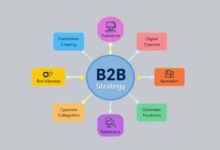
1. Understanding the Core of a B2B Marketing Strategy

A successful b2b marketing strategy isn’t just about selling products—it’s about building relationships, solving complex problems, and aligning with long sales cycles. Unlike B2C, where emotions often drive purchases, B2B decisions are rooted in logic, ROI, and long-term value. That’s why your strategy must be precise, data-driven, and customer-centric.
What Defines B2B Marketing?
B2B (Business-to-Business) marketing involves selling products or services from one business to another. This could range from SaaS platforms to industrial machinery. The key differentiator is the decision-making unit—multiple stakeholders, longer sales cycles, and higher transaction values.
- Target audience: Businesses, not individual consumers
- Sales cycle: Typically longer and more complex
- Decision-making: Involves multiple departments (finance, IT, operations)
- Value proposition: Focused on efficiency, cost savings, and scalability
“B2B marketing is not about shouting the loudest—it’s about speaking the right language to the right people at the right time.” — HubSpot
Why a Solid B2B Marketing Strategy Matters
Without a clear b2b marketing strategy, even the best products can fail. A well-structured plan ensures alignment between marketing, sales, and customer success teams. It also helps in allocating budgets effectively and measuring ROI accurately.
- Increases lead quality and conversion rates
- Reduces customer acquisition costs (CAC)
- Enhances brand authority and trust
- Supports scalable growth
According to McKinsey, 74% of B2B buyers conduct more than half their research online before making a purchase. This highlights the critical role of digital presence in any modern b2b marketing strategy.
2. Building a Data-Driven B2B Marketing Strategy
Data is the backbone of any high-performing b2b marketing strategy. From identifying ideal customer profiles (ICPs) to optimizing campaign performance, data transforms guesswork into precision.
Identifying Your Ideal Customer Profile (ICP)
Your ICP is a detailed description of the company most likely to benefit from your solution. It includes firmographic data like industry, company size, revenue, and geographic location, as well as behavioral insights such as technology stack and pain points.
- Use CRM and sales data to analyze past successful clients
- Leverage tools like LinkedIn Sales Navigator for prospecting
- Conduct interviews with existing customers to uncover patterns
A well-defined ICP ensures your b2b marketing strategy targets companies with the highest likelihood of conversion.
Leveraging Customer Data Platforms (CDPs)
CDPs unify customer data from multiple sources—website, email, CRM, social media—into a single view. This enables hyper-personalized messaging and better segmentation.
- Improve lead scoring accuracy
- Enable dynamic content personalization
- Track customer journey across touchpoints
For example, Segment helps companies like Twilio and Airbnb consolidate customer data to power their b2b marketing strategy with real-time insights.
3. Crafting a High-Impact Content Marketing Strategy
Content is king in B2B marketing. A strong content-driven b2b marketing strategy educates, nurtures, and converts prospects through valuable, relevant information.
Creating Educational Content That Converts
B2B buyers are researchers. They seek in-depth content that helps them understand problems and evaluate solutions. Your content should answer their questions before they even ask them.
- Whitepapers and research reports
- Case studies showcasing ROI
- Webinars with industry experts
- Gated eBooks for lead generation
According to Content Marketing Institute, 91% of B2B marketers use content marketing to reach customers. But only 42% have a documented strategy—this is where you can gain a competitive edge.
Optimizing for SEO in B2B Content
Unlike B2C, B2B SEO focuses on long-tail, intent-rich keywords. Think “best CRM for mid-sized manufacturing companies” rather than “CRM software.”
- Conduct keyword research using tools like Ahrefs or SEMrush
- Optimize for search intent (informational, commercial, transactional)
- Build topic clusters around core offerings
- Earn backlinks through guest posting and PR
A well-optimized blog can become a lead-generation engine. For instance, HubSpot’s blog drives millions of monthly visitors by consistently publishing SEO-friendly, educational content.
4. Leveraging Account-Based Marketing (ABM) in Your B2B Strategy
Account-Based Marketing (ABM) is one of the most powerful components of a modern b2b marketing strategy. Instead of casting a wide net, ABM focuses on targeting high-value accounts with personalized campaigns.
What Is Account-Based Marketing?
ABM treats individual accounts as markets of one. Marketing and sales teams collaborate to create tailored experiences for key decision-makers within target companies.
- Identify high-potential accounts using firmographic and behavioral data
- Develop personalized messaging and content
- Use multi-channel outreach (email, ads, direct mail)
- Measure success by account engagement and revenue, not just leads
As ABM Institute reports, 87% of marketers say ABM delivers higher ROI than other marketing strategies.
Implementing ABM: A Step-by-Step Guide
Executing a successful ABM campaign requires alignment, technology, and patience.
- Collaborate with Sales: Jointly define target accounts and buying committees.
- Create Personalized Campaigns: Develop content and ads tailored to each account’s pain points.
- Deploy Multi-Touch Tactics: Combine email, LinkedIn ads, retargeting, and direct outreach.
- Track Engagement: Use tools like Terminus or Demandbase to monitor account-level engagement.
- Measure Revenue Impact: Focus on pipeline velocity and deal size, not just MQLs.
“ABM flips the funnel: instead of attracting leads and hoping they convert, you start with the customer and work backward.” — ITSMA
5. Mastering Digital Channels in Your B2B Marketing Strategy
A robust b2b marketing strategy leverages multiple digital channels to reach decision-makers where they spend their time: LinkedIn, search engines, email, and industry forums.
LinkedIn: The B2B Marketing Powerhouse
With over 900 million users, LinkedIn is the go-to platform for B2B professionals. It’s where executives network, research solutions, and engage with thought leadership.
- Optimize company pages and employee profiles
- Publish long-form articles and insights
- Run targeted Sponsored Content and InMail campaigns
- Engage in relevant groups and discussions
According to LinkedIn for Business, LinkedIn generates 3x more conversions than any other social platform for B2B marketers.
Email Marketing: Still the King of ROI
Email remains one of the highest ROI channels in a b2b marketing strategy. When done right, it nurtures leads, drives engagement, and supports sales outreach.
- Segment lists based on behavior and lifecycle stage
- Use automation tools like HubSpot or Marketo
- Personalize subject lines and content
- A/B test CTAs and send times
Mailchimp reports that segmented email campaigns generate 30% higher open rates and 50% more click-throughs.
6. Measuring Success: KPIs and Analytics in B2B Marketing
You can’t improve what you don’t measure. A mature b2b marketing strategy includes clear KPIs and analytics to track performance and optimize results.
Key Performance Indicators (KPIs) for B2B
Not all metrics are created equal. Focus on KPIs that align with business outcomes.
- Customer Acquisition Cost (CAC): Total marketing spend divided by new customers acquired
- Customer Lifetime Value (CLTV): Predicted revenue from a customer over their lifetime
- Lead-to-Customer Conversion Rate: Percentage of leads that become paying customers
- Marketing Qualified Leads (MQLs): Leads deemed ready for sales follow-up
- Return on Ad Spend (ROAS): Revenue generated per dollar spent on advertising
According to Gartner, top-performing B2B marketing teams are 1.5x more likely to use advanced analytics to guide decisions.
Marketing Attribution Models
Understanding which channels drive conversions is crucial. Attribution models help assign credit to touchpoints along the buyer’s journey.
- First-Touch: Credits the first interaction
- Last-Touch: Credits the final click before conversion
- Multi-Touch: Distributes credit across multiple touchpoints (e.g., linear, time-decay)
Tools like Google Analytics 4 and Salesforce Marketing Cloud offer robust attribution capabilities to refine your b2b marketing strategy.
7. Future-Proofing Your B2B Marketing Strategy
The B2B landscape is evolving fast. AI, automation, and changing buyer behaviors demand a forward-thinking b2b marketing strategy.
The Rise of AI and Automation
Artificial Intelligence is no longer sci-fi—it’s a core component of modern marketing. From chatbots to predictive analytics, AI enhances efficiency and personalization.
- Use AI-powered tools like Drift for instant lead engagement
- Leverage predictive lead scoring to prioritize high-intent prospects
- Automate content recommendations based on user behavior
A study by IBM found that AI can reduce marketing operational costs by up to 30% while improving campaign effectiveness.
Adapting to Changing Buyer Expectations
Today’s B2B buyers expect Amazon-like experiences: seamless, personalized, and self-serve. Your b2b marketing strategy must adapt.
- Invest in interactive content (quizzes, calculators, configurators)
- Enable self-service demos and trials
- Provide 24/7 support via chatbots and knowledge bases
- Ensure mobile optimization across all touchpoints
As Forrester notes, 68% of B2B buyers prefer to research and purchase online without speaking to a sales rep—unless absolutely necessary.
8. Common Pitfalls to Avoid in Your B2B Marketing Strategy
Even the best strategies can fail if common mistakes aren’t addressed. Awareness is the first step to prevention.
Ignoring the Buyer’s Journey
Many companies focus only on the top or bottom of the funnel. A complete b2b marketing strategy maps content and tactics to each stage: awareness, consideration, and decision.
- Awareness: Blog posts, social media, SEO
- Consideration: Webinars, case studies, comparison guides
- Decision: Demos, trials, proposals
Failing to nurture leads through the entire journey results in lost opportunities.
Poor Sales and Marketing Alignment
Silos between sales and marketing teams cripple execution. A unified b2b marketing strategy requires shared goals, processes, and technology.
- Hold regular sync meetings
- Use shared CRM platforms
- Define clear SLAs for lead handoff
- Co-create messaging and content
Companies with strong sales and marketing alignment achieve 36% higher customer retention and 38% higher sales win rates (source: MarketingProfs).
9. Real-World Examples of Winning B2B Marketing Strategies
Learning from industry leaders can accelerate your own success. Let’s look at companies that nailed their b2b marketing strategy.
How HubSpot Dominates with Inbound Marketing
HubSpot built a $4B+ company by pioneering inbound marketing. Their b2b marketing strategy revolves around creating value-first content that attracts, engages, and delights customers.
- Free tools (Website Grader, Email Signature Generator)
- Comprehensive blog with 100k+ articles
- Certification programs that build community
- Seamless integration between content and product
Their flywheel model replaces the traditional funnel, emphasizing momentum and customer advocacy.
Snowflake’s Go-To-Market Innovation
Snowflake, the cloud data platform, scaled rapidly by combining product-led growth with enterprise sales. Their b2b marketing strategy includes:
- Free trial with instant access
- Developer-focused documentation and tutorials
- Strategic partnerships with AWS, Azure, and Google Cloud
- High-impact events like Snowflake Summit
This hybrid approach allowed them to capture grassroots adoption while closing enterprise deals.
10. Building a Scalable B2B Marketing Strategy Framework
To sustain growth, your b2b marketing strategy must be repeatable, measurable, and scalable. Here’s a proven framework to follow.
The 5-Step B2B Marketing Strategy Framework
- Research & Define: Understand your market, ICP, and competitive landscape.
- Position & Message: Craft a compelling value proposition and messaging framework.
- Channel Strategy: Select the most effective channels (digital, events, partnerships).
- Content & Campaigns: Develop assets and run integrated campaigns.
- Measure & Optimize: Track KPIs, analyze performance, and iterate.
This cyclical process ensures continuous improvement and alignment with business goals.
Tools to Power Your Strategy
Leverage technology to execute and scale your b2b marketing strategy efficiently.
- CRM: Salesforce, HubSpot CRM
- Marketing Automation: Marketo, Pardot, ActiveCampaign
- Analytics: Google Analytics, Mixpanel, Tableau
- SEO & Content: Ahrefs, SEMrush, Grammarly
- ABM Platforms: Terminus, Demandbase, 6sense
Integrating these tools into a cohesive tech stack amplifies your marketing impact.
What is the most important element of a b2b marketing strategy?
The most important element is alignment—between marketing and sales, between messaging and customer needs, and between tactics and business goals. Without alignment, even the best tactics fail to deliver results.
How long does it take to see results from a b2b marketing strategy?
B2B marketing is a long-term game. While some tactics like paid ads may yield quick leads, building brand authority and trust takes 6–12 months. Consistent execution is key to sustainable growth.
Can small businesses use advanced b2b marketing strategies?
Absolutely. While budget may be limited, small businesses can focus on high-impact, low-cost tactics like content marketing, SEO, and LinkedIn outreach. Tools like HubSpot and Mailchimp offer affordable plans for startups.
Is ABM only for large enterprises?
No. While ABM is often associated with enterprise sales, small and mid-sized businesses can use “light” ABM—focusing on a handful of high-value accounts with personalized outreach. It’s about quality, not quantity.
How do I measure the ROI of my b2b marketing strategy?
Track revenue generated from marketing-sourced leads, calculate CAC, and compare CLTV to CAC. Use attribution models to understand channel performance. Marketing ROI = (Revenue from Marketing – Marketing Spend) / Marketing Spend.
Building a winning b2b marketing strategy isn’t about chasing trends—it’s about creating a disciplined, customer-focused system that drives predictable growth. From defining your ICP to leveraging AI and ABM, every element must work in harmony. The companies that thrive in 2024 and beyond are those that treat marketing as a strategic function, not just a cost center. Start with research, stay agile, measure relentlessly, and always put the customer first. Your b2b marketing strategy isn’t just a plan—it’s your roadmap to market leadership.
Further Reading:
